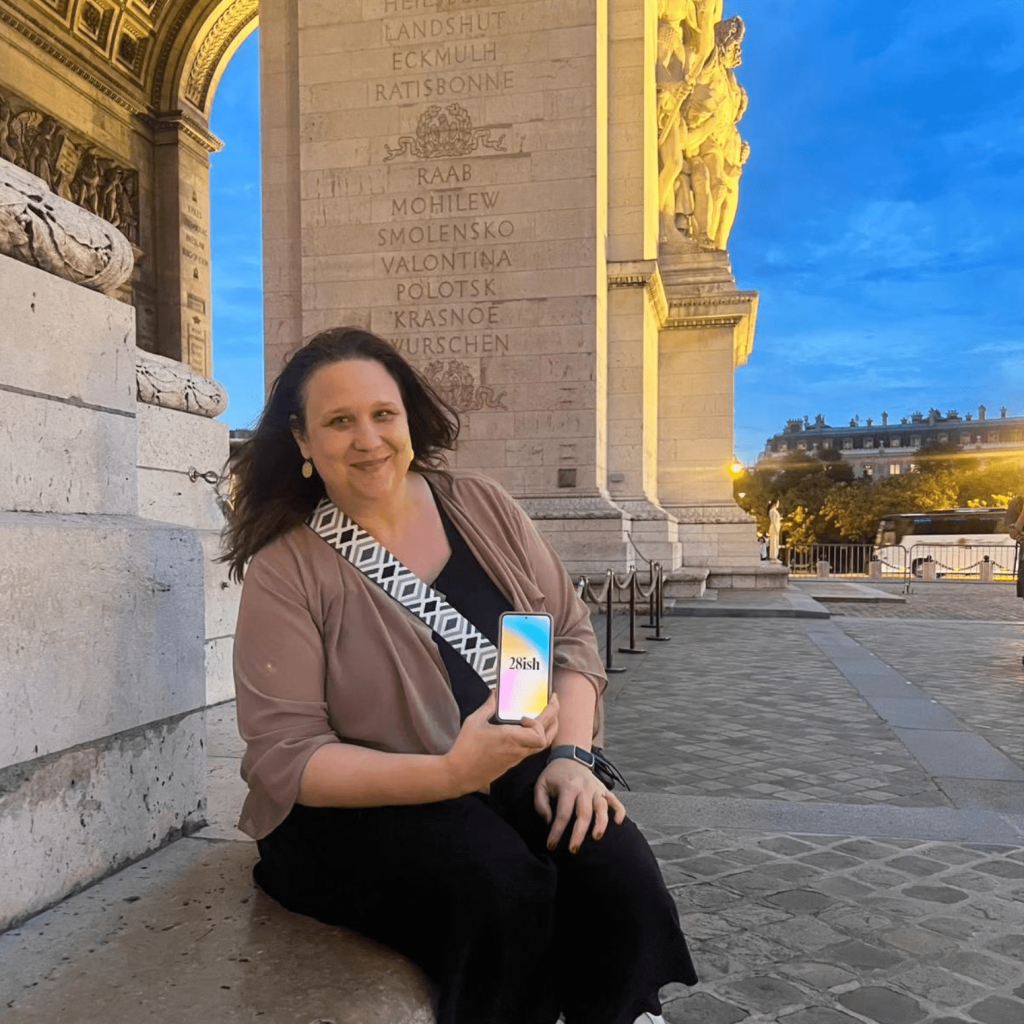

Carrie here. Hello from perimenopause! Cue Adele’s Hello. Or not quite on the other side.
This month’s article is an important one. Pranitha covers the difference between perimenopause, menopause, and post-menopause, why bone and heart health need extra attention in the years after, and whether we’re still cyclical once our periods stop. But I felt a need to jump in and add my unique perspective.
I love my cycle. I am aligned with my cycle. Yes, I mess that up sometimes, don’t respect my own internal rhythm, and life gets in the way. But overall, I am aligned.
Perimenopause has given me a taste of what it’s like when the container of my cycle is compromised … leaking … not as it always is. It’s similar to my postpartum time, when I didn’t have a cycle through pregnancy, then didn’t know when it would come back after giving birth and then had to get to know it all over again.
So I’ve been grappling with some questions, and this article is a first attempt to explore them. Does it even matter anymore? Am I still going to be cyclical when I’m post-menopausal? Do I still want to be? And why is this so important to me?
Here’s what I believe. I used to feel strife and confusion over how differently I showed up from week to week. Now that I’m aligned with my cycle and work with it, all of that has been transmuted into a powerful alignment. I enjoy changing. I enjoy not always being the same way all the time.
And it turns out research backs this up. Studies on happiness show that variety boosts our well-being when it unfolds over days, weeks, and months, but not when it’s crammed into an hour. That’s what a rhythm is. Change at a pace we can actually live with.
Plus, we know our hormones still keep a daily rhythm after menopause. The monthly cycle ends, but the daily one stays.
And the moon can be a beautiful replacement. My personal decision to celebrate the Wheel of the Year and the earth’s changing seasons is, and will still be, there. Will I still be cyclical when I’m post-menopausal? I don’t know yet. But I believe I’ll still want to be.
Last month, we talked about surgical menopause, but we’re yet to dive into traditional menopause and what this phase of life may bring.
Menopause is the milestone; post-menopause is the life stage that follows. Neither marks the end of vitality or cyclicality, but both can invite a new understanding of the body’s rhythms and needs.
The Three Stages
Perimenopause is the period leading up to menopause when the levels of estrogen and progesterone begin to fluctuate, marking the natural transition to the end of the reproductive years.
Menopause is the transition point defined as 12 consecutive months without a menstrual period. Both stages may affect mood, energy, sleep, concentration, and overall well-being [1-2].
Post-menopause refers to all the years after menopause has been reached. During the post-menopausal years, estrogen and progesterone remain consistently lower, and the hormonal fluctuations of perimenopause generally settle. The cycle during the reproductive years may have had patterned physical, emotional, and mental states. After menopause, cyclicality does not disappear but can become less predictable. Some symptoms, such as hot flashes, sleep disturbances, and changes in mood, may continue, while others may ease [1-2].
Bone Health
Bone health is a key consideration because declining estrogen accelerates bone loss, increasing the risk of osteoporosis and fractures. Weight-bearing exercise, like strength-training, adequate calcium and vitamin D, and appropriate bone-density screening can help support bone strength [3-4]. These are beneficial habits that can be taken up earlier in life before stepping into the post-menopausal years.
What this may look like in everyday life:
You might start noticing that maintaining muscle strength, carrying groceries, climbing stairs, or recovering from a minor fall feels more difficult than it once did. You don’t need to overhaul your routine overnight. Adding strength exercises a few times a week, choosing calcium-rich foods, and discussing your bone health and screening needs with your healthcare professional are practical steps you can begin taking now. These habits are valuable before menopause, too, because building and maintaining bone strength is a long-term investment.
Heart Health
Cardiovascular health also deserves greater attention. During the post-menopausal period, the risk of heart disease increases with age and changes in cholesterol levels, with higher sensitivity to rises in blood pressure and visceral fat storage. Ageing and declining estrogen levels can influence cholesterol levels, blood pressure, and the distribution of body fat, including an increase in abdominal fat for some women. Together with other risk factors, these changes can contribute to a higher risk of cardiovascular disease [4-5].
What this may look like in everyday life:
Perhaps your blood pressure is creeping up at routine appointments, or your cholesterol results have changed despite feeling perfectly well. These changes don’t automatically mean something is wrong, but they are useful reasons to check in with your health. Regular physical activity, a balanced diet, avoiding smoking, and monitoring blood pressure and cholesterol can help you respond proactively rather than waiting for a problem to arise. Starting now matters because cardiovascular health is shaped by the habits and risk factors you build up over many, many years.
Does rhythm continue?
As someone steps into the post-menopausal years, patterns of energy, motivation, and the need for rest or connection take new roles. The brain and body continue to coordinate hormones, sleep, temperature, energy, and other functions. The circadian system continues to regulate the sleep-wake cycle and influences the timing of hormones such as cortisol and melatonin. These rhythms can affect when you feel alert, sleepy, or ready to rest [6-7].
For some women, hot flashes and night sweats follow a daily pattern, often clustering at night or during parts of the day. Circadian rhythms may contribute to this pattern, although not every woman experiences it in the same way.
Many hormonal rhythms become less pronounced or change in timing as we age. The reproductive cycle no longer provides the monthly fluctuations associated with ovulation and menstruation, and there is currently no strong evidence that a comparable monthly hormonal cycle continues after menopause. This distinction matters because it helps explain why you may still experience noticeable changes in sleep, temperature, mood, or energy even without a menstrual cycle. Those experiences can reflect ageing, lifestyle, and other factors rather than a monthly cycle [6,8-9].
Some women also find meaning in organizing their lives around the moon, the seasons, or personal cycles of activity and rest. These can be useful chosen practices for reflection and self-care. Menopause changes one important biological rhythm, but it does not remove the body’s capacity for rhythmic regulation. Understanding what continues, what changes, and what you can observe in your own life makes it easier to respond to your body with curiosity..
Cycle awareness, whether this be the tracking of energy, habits, or moods, can be a powerful tool for understanding one’s patterns and adapting routines with greater self-awareness and compassion.
Menopause can therefore be viewed, not simply as the end of one cycle, but as an opportunity to develop a new relationship with changing needs. What is one habit that you want to adopt now to support the future you?
References
- Burger, H., Woods, N. F., Dennerstein, L., Alexander, J. L., Kotz, K., & Richardson, G. (2007). Nomenclature and endocrinology of menopause and perimenopause. Expert Review of Neurotherapeutics, 7(S1), S35–S43. https://doi.org/10.1586/14737175.7.11s.S35.
- Harper, J. C., Phillips, S., Biswakarma, R., Yasmin, E., Saridogan, E., Radhakrishnan, S., Davies, M. C., & Talaulikar, V. (2022). An online survey of perimenopausal women to determine their attitudes and knowledge of the menopause. Women’s Health, 18. https://doi.org/10.1177/17455057221106890.
- de Villiers, T. J. (2024). Bone health and menopause: Osteoporosis prevention and treatment. Best Practice & Research Clinical Endocrinology & Metabolism, 38(1), Article 101782. https://doi.org/10.1016/j.beem.2023.101782.
- Nash, Z., Al-Wattar, B. H., & Davies, M. (2022). Bone and heart health in menopause. Best Practice & Research Clinical Obstetrics & Gynaecology, 81, 119–133. https://doi.org/10.1016/j.bpobgyn.2022.03.002.
- Ryczkowska, K., Adach, W., Janikowski, K., Banach, M., & Bielecka-Dabrowa, A. (2022). Menopause and women’s cardiovascular health: is it really an obvious relationship? Archives of Medical Science, 19(2), 458–466. https://pmc.ncbi.nlm.nih.gov/articles/PMC10074318/.
- Gudmundsson, A., Goodman, B., Lent, S., Barczi, S., Grace, A., Boyle, L., Ershler, W. B., & Carnes, M. (1999). Effects of estrogen replacement therapy on the circadian rhythms of serum cortisol and body temperature in postmenopausal women. Experimental Gerontology, 34(6), 809–818. https://doi.org/10.1016/s0531-5565(99)00044-3.
- Shaw, N. D., Gill, S., Lavoie, H. B., Marsh, E. E., & Hall, J. E. (2011). Persistence of sleep-associated decrease in GnRH pulse frequency in the absence of gonadal steroids. The Journal of Clinical Endocrinology & Metabolism, 96(8), 2590–2595. https://doi.org/10.1210/jc.2011-1188.
- Genazzani, A. D., Petraglia, F., Sgarbi, L., Montanini, V., Hartmann, B., Surico, N., Biolcati, A., Volpe, A., & Genazzani, A. R. (1997). Difference of LH and FSH secretory characteristics and degree of concordance between postmenopausal and aging women. Maturitas, 26(2), 133–138. https://pubmed.ncbi.nlm.nih.gov/9089563/.
- Mortola, J. F., Laughlin, G. A., & Yen, S. S. (1992). A circadian rhythm of serum follicle-stimulating hormone in women. The Journal of Clinical Endocrinology & Metabolism, 75(3), 861–864. https://doi.org/10.1210/jcem.75.3.1517378.